
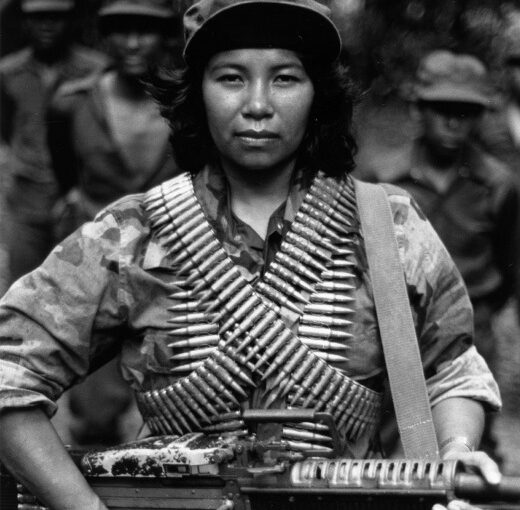
My article on the Contra War, “Contra Solidarity: Revolution and Counterrevolution in the United States and Nicaragua,” just appeared in the journal Cold War History. The article develops some themes from my book to consider the mutually constitutive character of both radicals and reactionaries in the late Cold War. Though there’s a significant literature on the way mimesis of the left shapes conservative politics, my article tries to show the mutual interaction of left and right over time, and its consequences for the Nicaraguan revolution and the Contra War. Here’s the abstract:
This article explains how the Contra War was shaped by interaction between revolutionaries and counterrevolutionaries both before and after Nicaragua’s 1979 revolution. In successfully overthrowing the Somoza government, the Frente Sandinista de Liberación Nacional (FSLN) built a multilayered revolutionary coalition out of the fractured Nicaraguan politics created by the Cold War developmental state. In response to the FSLN’s successful solidarity politics, the US government, from the beginning of the revolution, through to the Contra War in the 1980s, applied a diverse set of tactics that drew inspiration from the successes of Nicaragua’s revolutionary practice in order to undermine the revolution. This adaptive response helped radicalize Nicaragua’s revolution, widened support for the Contra War, despite adverse US and global public opinion, and made possible the unravelling of the Iran-Contra Affair.