Blog Posts

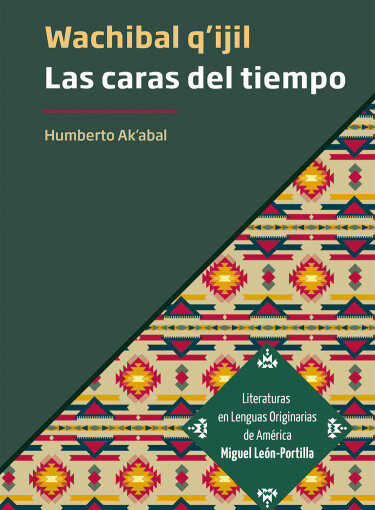
Ri ubix ri ulew: Translating Humberto Ak’abal between Languages and Worlds


Update (4/2/2026): “Ri ubix ulew” has now been published online by Translation Review.

My essay, “Ri ubix ri ulew: Translating Humberto Ak’abal between Languages and Worlds,” has been accepted for publication in the journal Translation Review. The article analyzes the differences between K’iche’ and Spanish versions of poems by Maya poet Humberto Ak’abal, highlighting linguistic and epistemic differences across languages and communities in contemporary Guatemala. The article also highlights Ak’abal’s own theory of language and translation, and the importance of Guatemala’s recent history of violence and genocide for Ak’abal’s life and work. The publication will also include original English translations of Ak’abal’s poems produced in collaboration with Pablo Francisco Hernandez of Cantel, Guatemala. 

This paragraph sums up the essay’s thesis:

Each poem has been chosen to illustrate the distinctions between the Spanish and K’iche’ versions of the original texts, both written by Humberto Ak’abal. I argue here that these differences are not incidental to Ak’abal’s unique style of dualistic artistic production, as a poet who wrote simultaneously in K’iche’ and Spanish. Rather, linguistic disparity is essential to Ak’abal’s practice as a poet and intellectual who wrote as a member of Guatemala’s Maya population and an advocate for their linguistic and cultural inheritance. Ak’abal’s insistence on the distinctiveness of K’iche’ in comparison with Spanish and other European languages has been labeled as “strategic primitivism” with real but limited political usefulness.[i] This essay will argue that it is better understood as an artistic project that deliberately accentuates the sense of language itself as a practice drawing together incommensurable but nonetheless communicable worlds. This artistic project also conveys a social project, but one that aims beyond essentialism to renew Maya culture and reckon with the ongoing violence and dispossession of indigenous cultures in the modern world.

[i] Barrett, “Ideophones,” 415.
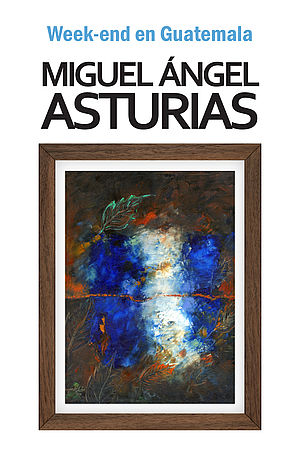
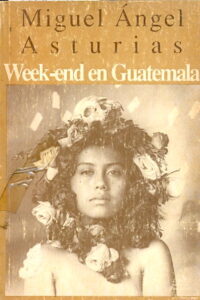
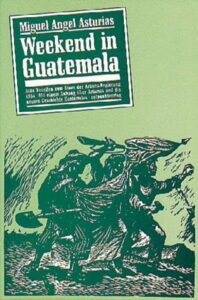
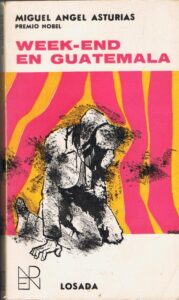
Miguel Ángel Asturias, Week-end en Guatemala

Amazon.com: Week-end en Guatemala (Spanish Edition) eBook : Asturias, Miguel Ángel: Tienda Kindle

Week-end en Guatemala


I’ve just signed a contract with Verso Books to translate this wonderful book, Week-end en Guatemala, by Miguel Ángel Asturias (Weekend in Guatemala in my translation). Written in the immediate aftermath of the US-sponsored overthrow of the Arbenz government in Guatemala in 1954, the book conveys the white-hot fury set off by these events that would fuel Guatemala’s civil war, and Latin American’s Cold War, for decades to come.

When Asturias won the Nobel Prize for literature in 1967, publishers considered translating this book to introduce an English-speaking audience to his work. Given the Cold War, Asturias’s dubious politics as critic of US imperialism, and his recent winning of the Lenin Prize from the Soviet Union, this book was considered too hot to touch. Instead, Americans were introduced to El Señor President and Hombres de Maiz, as well as the less critically well-received Banana Trilogy.

Week-end is a perfect distillation of Asturias’s style, displaying his strident anti-imperialism alongside his well-known (and controversial) indigenism that has brought criticism from Guatemala’s Maya population for claiming to speak for them. While still characterized by Asturias’s fanciful depiction of indigenous people, Week-end makes the indigenous population the heroes of the story, who rise up and overthrow the US-installed government in the name of democracy. While much has changed since Asturias wrote this book, his description of indigenous resistance bears striking similarities to the 2023 indigenous rebellion that protected Guatemala’s fragile democracy from elite attempts to subvert the will of the country’s indigenous population. 


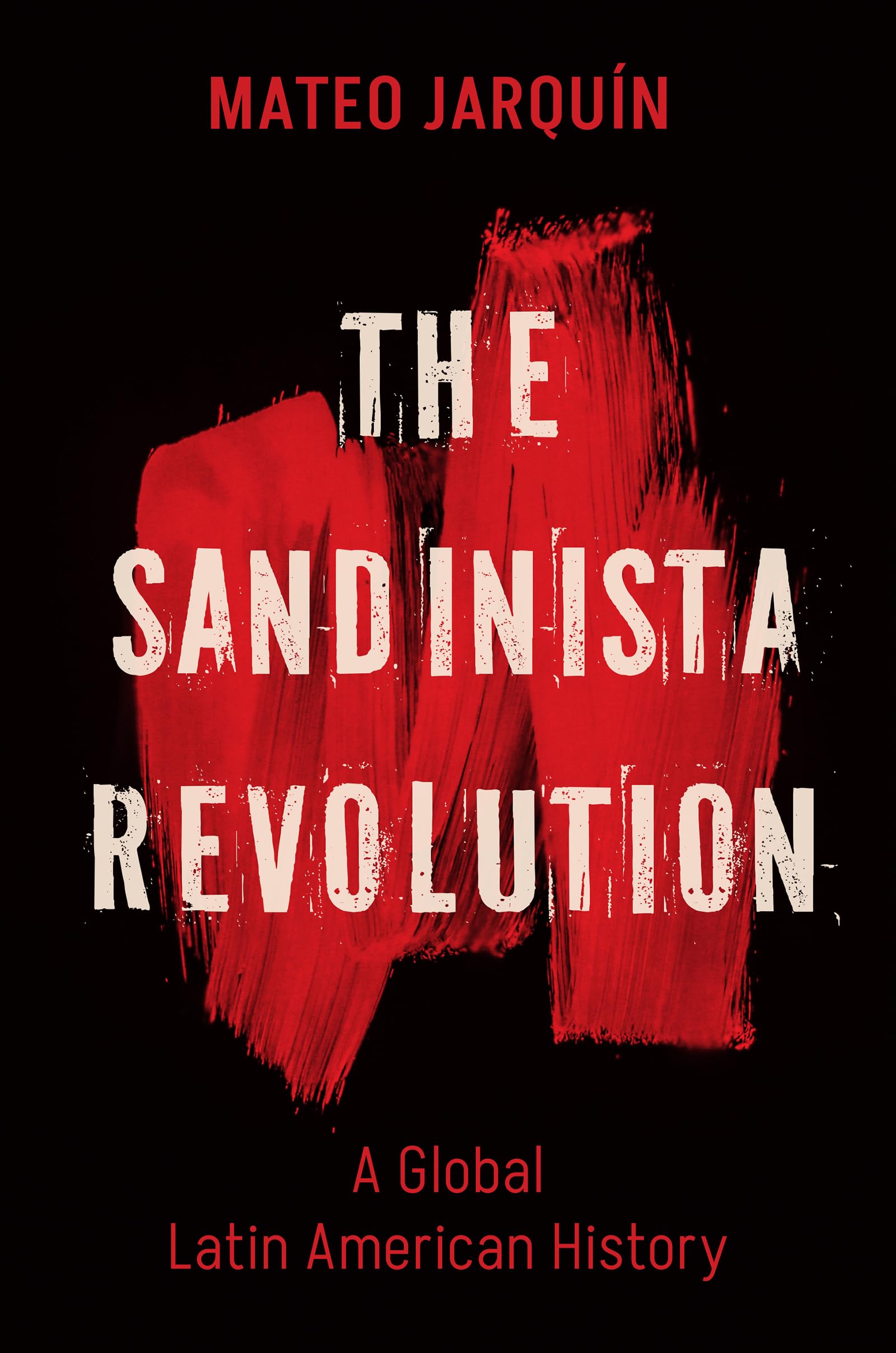
AHR Review of Jarquín, The Sandinista Revolution

The Sandinista Revolution: A Global Latin American History (New Cold War History) : Mateo Jarquín (author): Amazon.co.uk: Books

My review of The Sandinista Revolution: A Global Latin American History, by Mateo Jarquín, has appeared in the American Historical Review. Here’s an excerpt: 

Mateo Jarquín. The Sandinista Revolution: A Global
Latin American History
. University of North Carolina
Press, 2024. Pp. 336. Paper $29.95.


Every revolution is global in both its origins and its repercussions, and Nicaragua’s was no different. In
The Sandinista Revolution: A Global Latin American History, Mateo Jarquín emphasizes the regional over the global, placing Latin American diplomacy at the
center of the Nicaraguan Revolution and the counterrevolutionary struggle it set off. In foregrounding Latin American diplomatic efforts first to remove the Somoza dictatorship and then to manage the ensuing regional conflict, Jarquín contends that “the view from
Washington can obscure the Nicaraguan Revolution’s global dimensions” (2). The book draws on thorough research in multiple archives across Latin America and
interviews with many Nicaraguan and other Central American diplomats, reinforcing the importance of regional diplomacy in Latin America’s Cold War.


A key question during the revolution and afterward has been not whether the Nicaraguan Revolution should be considered global but its polarity on the globe itself: Was the revolution primarily a North-South or East-West conflict? Jarquín argues that in its earliest stages, the Sandinistas embraced the East-West polarity of socialism versus capitalism even as they couched their demands in the North-South language of self-determination. Over the course of the decade following the successful revolution, the language of self-determination and democracy would crowd out the aspiration for socialism as the revolution moved away from its most radical demands for social transformation. International
diplomacy played a key role in the transformation of revolutionary priorities, as Sandinista leaders fought for survival by shifting the revolution’s goals in response to
both internal and external pressures.

Earlier scholars like Reagan administration official Robert Kagan, author of A Twilight Struggle: American Power and Nicaragua, 1977–1990 (1996), also emphasized the centrality of diplomacy to the Sandinista Revolution, while holding that the primary US goal in funding the Contra war and Central American death squads was democratization. Jarquín dubs the Cold War in Nicaragua “crepuscular” instead of “twilight” as Kagan does, reframing the neoconservative narrative that US foreign policy brought democracy to Central America by including other diplomatic actors in intermediary roles (214). While Kagan argued that
US military and economic pressure forced Nicaragua to democratize, Jarquín frames Sandinistas’ compromises with international pressure as Latin American diplomatic successes. For instance, the 1979 Puntarenas plan that paved the way for Sandinista victory—calling for free elections, the preservation of private property, and the maintenance of Somoza’s National Guard—“represented a surprising rebuttal of North American
hegemony with little precedent in the history of the hemisphere” (72). As evidence of this rebuttal, Jarquín cites Carter National Security Advisor Zbigniew Brzezinski’s “despondency” at Cuban influence in Nicaragua. However, other Carter officials, such as Undersecretary of State Viron Vaky, who helped broker the deal, celebrated it as a harbinger of moderate policies to come, in which even a victorious Sandinista movement would
be constrained by its ties to the United States and its own allies among social democratic governments in Europe and Latin America even if it sought greater assistance from the Soviet Union.

Jarquín’s narrative shows that both views had elements of truth: The Soviet bloc did provide training, advice, and military assistance to the Sandinistas, while even Cuba encouraged moderation of revolutionary aims. The Sandinistas’ other allies, especially Latin American
and Western European social democracies, proved even more stringent in their demands for compromise from the Sandinistas, despite the movement leadership’s own generally Marxist-Leninist preferences. The onset of the Contra war brought new efforts led by Latin Americans to negotiate an end to the conflicts breaking out all over the region. The Contadora process that grew from Mexican President López Portillo’s efforts at mediation
showed that Latin American diplomacy itself had many faces given that Central America was divided between US clients—Guatemala, El Salvador, and Honduras—and less clearly aligned states, Costa Rica and Panama, which shared few goals and were riven by civil conflict. Through diplomatic efforts, the Sandinistas would eventually win recognition as legitimate political actors against the express wishes of the Reagan administration,
but that very recognition helped cement the shift of the revolution’s own polarity from an anticapitalist to a pro-democracy movement. A key moment in the narrative came when the 1984 Contadora treaty negotiations collapsed because of
pressure from Washington. Despite the many compromises the Sandinistas made with the demands of allies and the expectations of the United States, Jarquín asserts that recognition brought by even failed negotiations signified a setback for US hegemony. This meant that “Washington’s ‘East-West’ thesis was losing the war of ideas against what Alan García called the ‘thesis of continental sovereignty’” (160). Given that the Sandinistas, too, had once embraced the aforementioned thesis, this diplomatic victory in the war of ideas implies a major capitulation in the aims of the revolution itself, rendering it pyrrhic at best. There is no single point at which the Sandinistas traded socialism for democracy, but by the time of the Esquipulas accords, the Sandinistas had shifted their sights from the East-West conflict over capitalism and socialism to the North-South struggle for sovereignty and self-determination in response to threats from the United States. Was such a shift a victory for Latin American diplomacy, or a reiteration of the “view from Washington” from a different vantage? Jarquín’s work is an
important contribution to debates over whether Latin America’s post–Cold War neoliberal transformations grew from internal pressures or external forces.


Twilight leads to darkness in the book’s final pages. Though diplomacy had helped to “catalyze post–Cold War processes of regional integration, multilateralism, and multipolarity in the hemisphere,” one diplomat admitted that “‘nobody ever said that Esquipulas would solve the problems of inequality and misery’” (228, 234). Jarquín states that by those terms, diplomatic efforts were “rather successful,” bringing about the 1990 elections that the Sandinistas would lose and a decade of neoliberal restructuring. However,
in post–Cold War Nicaragua, the Sandinista party transformed under Daniel Ortega from a vibrant revolutionary experiment into a “family dictatorship” analogous to Bonapartism or Stalinism, leaving the country with neither socialism nor democracy (232). If the Sandinista Revolution was the sunset of the Cold War, Nicaragua still awaits its dawn.


David Johnson Lee Adams State University


K’iche’ resources

For the past few years I’ve been studying the K’iche’ language with the help of a friend from Cantel, Quetzaltenango. I’ve collected here some resources that might be of use to other K’iche’ learners. If you are learning, please reach out if you have others, or if you’d just like to chat!

tzij.coerll.utexas.edu

The best short introduction to K’iche’, created by the University of Texas Center for Open Educational Resources.

http://www.famsi.org/mayawriting/dictionary/christenson/quidic_complete.pdf

An English-K’iche’ dictionary, created by Allen Christenson at Brigham Young University.

https://www.mesoweb.com/publications/Christenson/PV-Literal.pdf

A side-by-side literal translation of perhaps the most important piece of indigenous literature in the Western Hemisphere, the Popol vuh. Some of the vocabulary is out of use, but much of it can be read with intermediary knowledge of contemporary K’iche’.

https://grajedamena.ufm.edu/

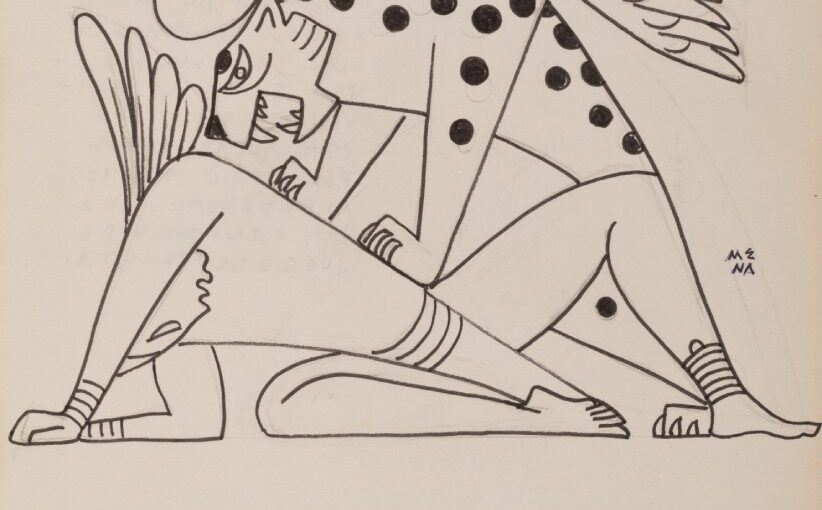
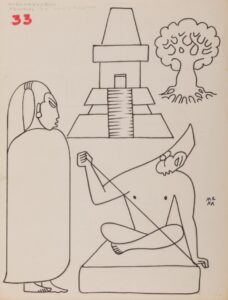
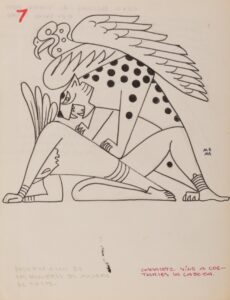
Speaking of the Popol vuh, the Universidad Francisco Marroquin has digitized the collected works of Guillermo Grajeda Mena, one of Guatemala’s most important plastic artists and head of the Instituto de Antropología e Historia de Guatemala. His illustrations of the Popol vuh are mesmerizing.

Contra Solidarity

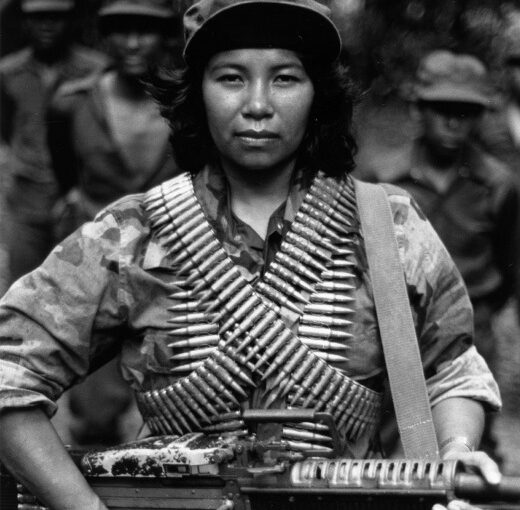
My article on the Contra War, “Contra Solidarity: Revolution and Counterrevolution in the United States and Nicaragua,” just appeared in the journal Cold War History. The article develops some themes from my book to consider the mutually constitutive character of both radicals and reactionaries in the late Cold War. Though there’s a significant literature on the way mimesis of the left shapes conservative politics, my article tries to show the mutual interaction of left and right over time, and its consequences for the Nicaraguan revolution and the Contra War. Here’s the abstract: 

This article explains how the Contra War was shaped by interaction between revolutionaries and counterrevolutionaries both before and after Nicaragua’s 1979 revolution. In successfully overthrowing the Somoza government, the Frente Sandinista de Liberación Nacional (FSLN) built a multilayered revolutionary coalition out of the fractured Nicaraguan politics created by the Cold War developmental state. In response to the FSLN’s successful solidarity politics, the US government, from the beginning of the revolution, through to the Contra War in the 1980s, applied a diverse set of tactics that drew inspiration from the successes of Nicaragua’s revolutionary practice in order to undermine the revolution. This adaptive response helped radicalize Nicaragua’s revolution, widened support for the Contra War, despite adverse US and global public opinion, and made possible the unravelling of the Iran-Contra Affair.

READING LEFEBVRE in D.F.

The following is a brief photo essay I created while reading Henri Lefebvre’s Production of Space while I was in Mexico City.  A meditation on space, power, monumentality, and absence.


View of Mexico City from the top of the monument to the revolution

The monument itself is made with the cupola of the never constructed Legislative Palace of deposed dictator Porfirio Diaz

The monument was constructed not to memorialize the revolution, but its institutionalization.  It was institutionalized after the death of President Alvaro Obregon, whose monument is in southern DF, to avoid the jockeying of caudillos for presidential power.

The monument to Obregon included for 40 years the general’s pickled arm at the base of his statue

Someone has spray painted the number 43 on the pedestals of every statue along a long stretch of Paseo Reforma, the number of missing students in the Ayotzinapa incident.

“‘Metaphorization’ and ‘metonymization’. What is the point of departure of these processes? The body metamorphosed. Do representations of space and representational spaces, to the degree that they make use of such ‘figures’, tend to ‘naturalize’ the spatial realm? No – or not merely – because they also tend to make it evaporate, to dissolve it in a luminous (optical and geometrical) transparency.”

Yesterday there was a student march commemorating the “Halconazo”, the 1971 killing of student protesters by the police. 2500 protesters were met by 4500 police (both riot police and repurposed transit police). The protesters assembled, as per tradition, in the Zocalo. The majority of the space of the Zocalo was fenced off for an upcoming Marc Anthony and Ruben Blades concert, so the protesters were corralled into the Southeast corner. Thanks to the peculiar acoustics of downtown, it was easier to hear the speech over the loudspeaker from a half-mile away, than right beside it.

The Zocalo is so-called because it is the site of a pedestal for a never-erected statue of General Santa Anna.

Last week, teachers protesting education reform came to the city in tens of thousands to protest education privatization. The police acted as dikes, steering the human mass in away from the expensive shops in the center of the city and the Zocalo, which was occupied by an international commercial exhibition.

There’s an upscale bar a block from the monument to the revolution, called La Manifestación, where the servers dress as riot police.

“Monumentality, for instance, always embodies and imposes a  clearly intelligible message. It says what it wishes to say – yet it hides a good deal more: being political, military, and ultimately fascist in character, monumental buildings mask the will to power and the arbi­trariness of power beneath signs and surfaces which claim to express collective will and collective thought. In the process, such signs and surfaces also manage to conjure away both possibility and time.”

“Is it really possible to use mural surfaces to depict social contradictions while producing something more than graffiti?”

Muralists Bravely Depict Social Issues That Scream Relevance Today, At Mexico City's Stunning Museo Del Palacio De Bellas Artes

Alegoría del viento, or El ángel de la paz.  Roberto Montenegro, 1928.  Mexico’s answer to Klee’s Angelus Novus.

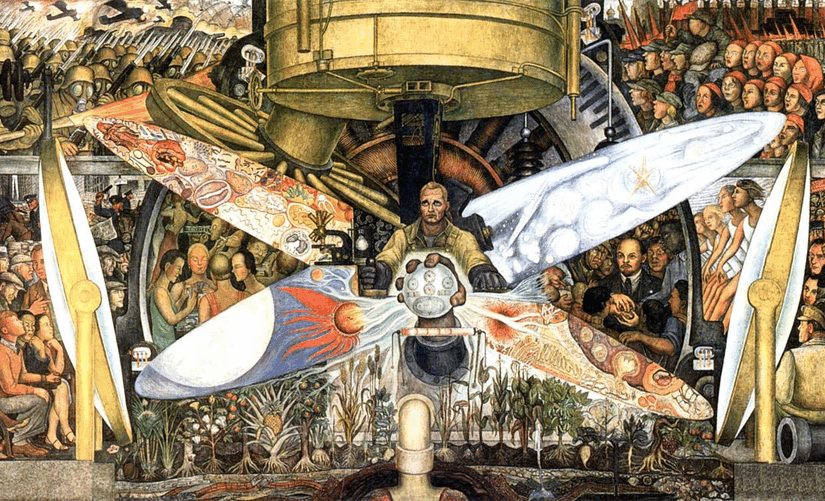
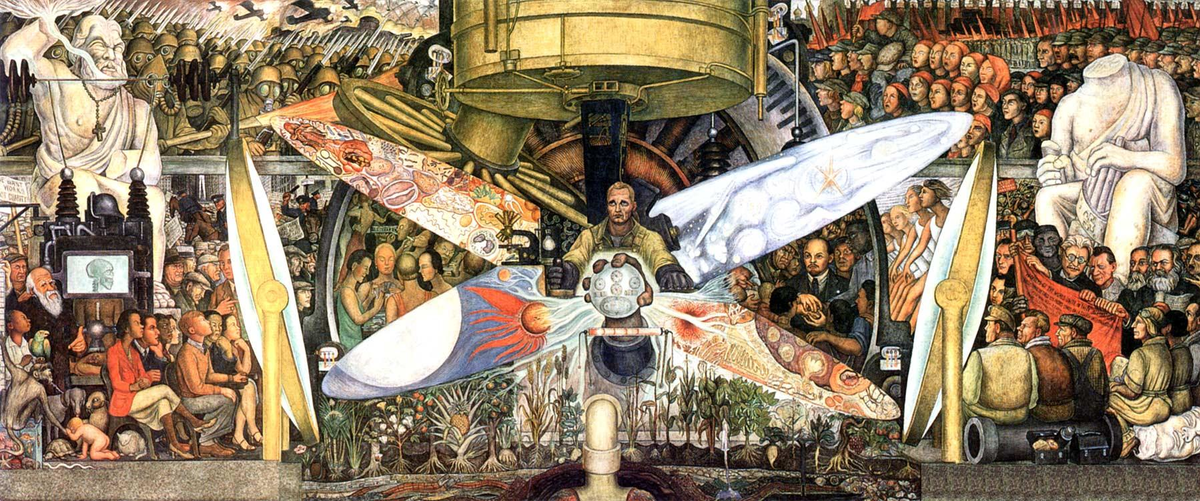
On the west wall of the same floor of the Palacio de Bellas Artes is Rivera’s mural “Man, Controller of the Universe”, originally painted at Rockefeller Center but destroyed because it included an image of V.I. Lenin.

“[T]he dissociation of spatial and temporal and the social actualization of that dissociation can only be a late development, a corollary of which has been the split between represen­tations of space and representational spaces. It is by taking represen­tational spaces as its starting-point that art seeks to preserve or restore this lost unity.”

Man at the Crossroads - Wikipedia